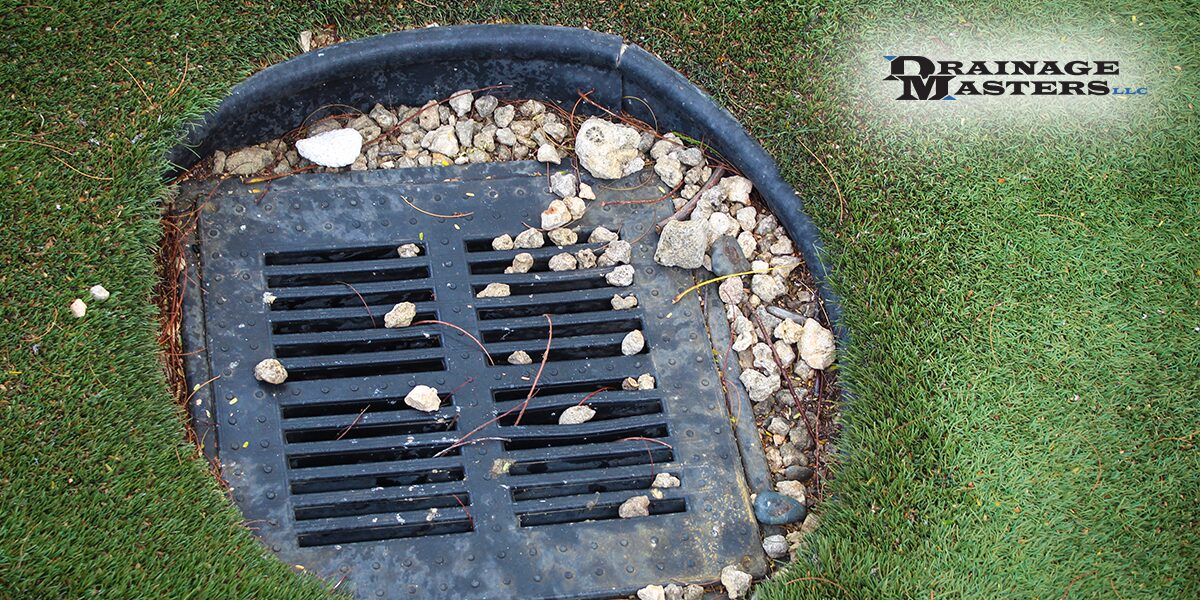
Those who live in Vancouver, WA, understand how rainy it can get. The area receives roughly 42 inches of rain spread across 163 rainy days every year. That’s a lot of water looking for somewhere to go — and if your property has low spots, those areas can quickly turn into persistent puddles and drainage issues.
Understanding how a catch basin works is the first step toward solving those problems for good. This guide walks through the mechanics, the best placement scenarios and what to expect if you move forward with an installation.
A catch basin is a below-ground drainage structure designed to collect surface water at a specific point and channel it into your property’s drainage system. It acts as a controlled entry point that accepts water and filters out debris before it can clog downstream pipes.
Every catch basin is built around three core components that work together to manage water and protect your drainage infrastructure.
While it can be easy to confuse catch basins and French drains, note that catch basins collect surface water at a specific low point. In contrast, French drains collect and redirect water across a longer path. French drains are especially useful for moving ground saturation and surface water away from areas like lawn edges, walkways, landscape borders and your home’s foundation. The two systems are often used together for comprehensive drainage coverage across a property.
When surface water rushes through the grate or inlet pipe during a rainstorm, it enters the basin and immediately slows down. Heavier particles — sand, grit, soil and other sediment — then sink to the sump floor. Cleaner water rises to the level of the outlet pipe and exits into the downstream drainage system.
This separation helps reduce the amount of debris entering your drainage lines, lowering the risk of clogs and backups. A properly functioning catch basin acts as the first line of defense for your entire stormwater management system.
A steel sediment-trapping design takes this further by using a baffle that creates a deliberate barrier between settled debris and the outlet. This helps keep more sediment contained in the basin between cleanings.
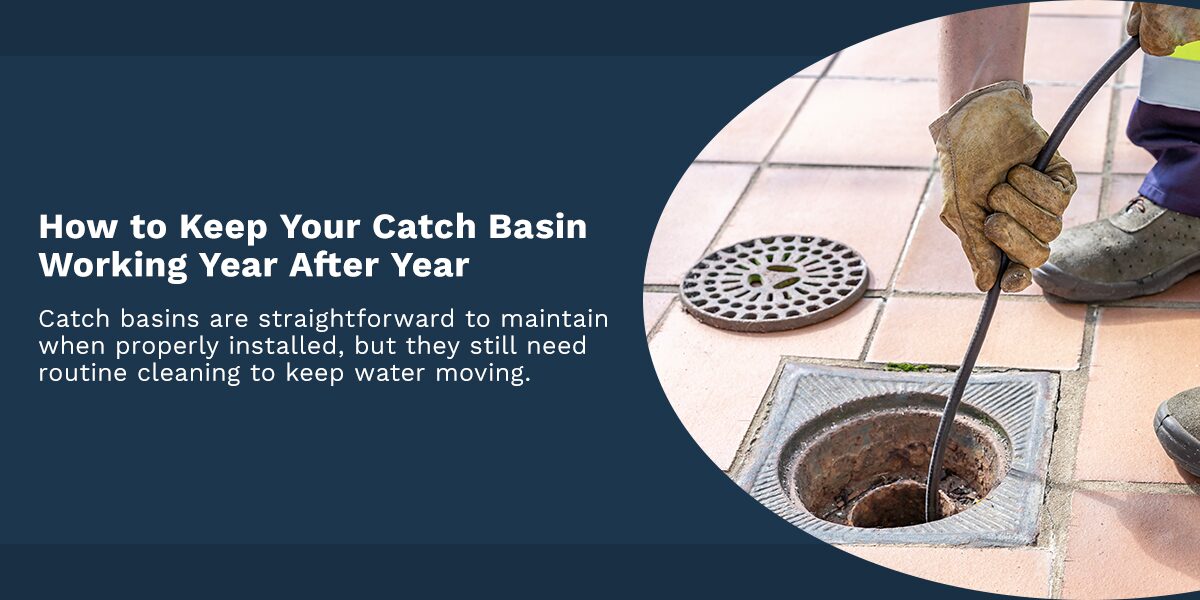
Catch basins are straightforward to maintain when properly installed, but they still need routine cleaning to keep water moving. Skipping that upkeep can lead to standing water and backups that call for a clogged catch basin fix.
Inspect the grate before and after the rainy season to clear leaves and debris. The sump should be cleaned when sediment reaches roughly one-third of the distance between the basin floor and the lowest connecting pipe. Cleaning regularly with a shop vac can help the system run efficiently, while the patent-pending steel design used by Drainage Masters can also help extend the time between cleanings.
Watch for these signs that your property needs a catch basin:
Professionals can assess your property to help determine if a catch basin is the right option for you.
Catch basins can be effective in these specific areas of your property:
Commercial properties use this same logic at scale. Apartment complexes, retail parking lots and similar sites rely on catch basins to manage stormwater runoff efficiently.
If your property has standing water spread across a broad area rather than concentrated in one spot, a different drainage approach might make more sense. Catch basins excel at point collection.
Catch basin installation just requires a few steps. The process starts with a site assessment. A drainage contractor evaluates low points on your property, confirms where water naturally flows and recommends the best placement for the catch basin. The crew then excavates at the identified low point to create space for the basin and trench for the outlet pipe.
After setting the basin in place, professionals connect the outlet pipe with a consistent downward grade. Gravity drives the flow, so you need a proper slope from the basin to the discharge point. After securing the pipe, the crew backfills around the basin and restores the surface — re-seeding the lawn, replacing pavement or matching the surrounding landscape.
Drainage Masters provides free estimates and warrantied work for catch basin installations in Portland, OR, and Vancouver, WA. Our company can assess your property’s drainage challenges and recommend the placement that keeps water moving away from your foundation.
Catch basins can keep your property dry by collecting and redirecting surface water before it becomes an issue. If you’ve recognized the warning signs and need a professional catch basin installation, turn to Drainage Masters. We have served the Pacific Northwest since 1996 with tailored drainage solutions backed by warranties and free estimates. Our patent-pending steel sediment-trapping catch basin is built to support the settling process and help reduce debris entering downstream pipes when properly maintained.
Get it done right the first time with Drainage Masters. Contact us to request a free estimate for your catch basin installation.

Linked sources:

