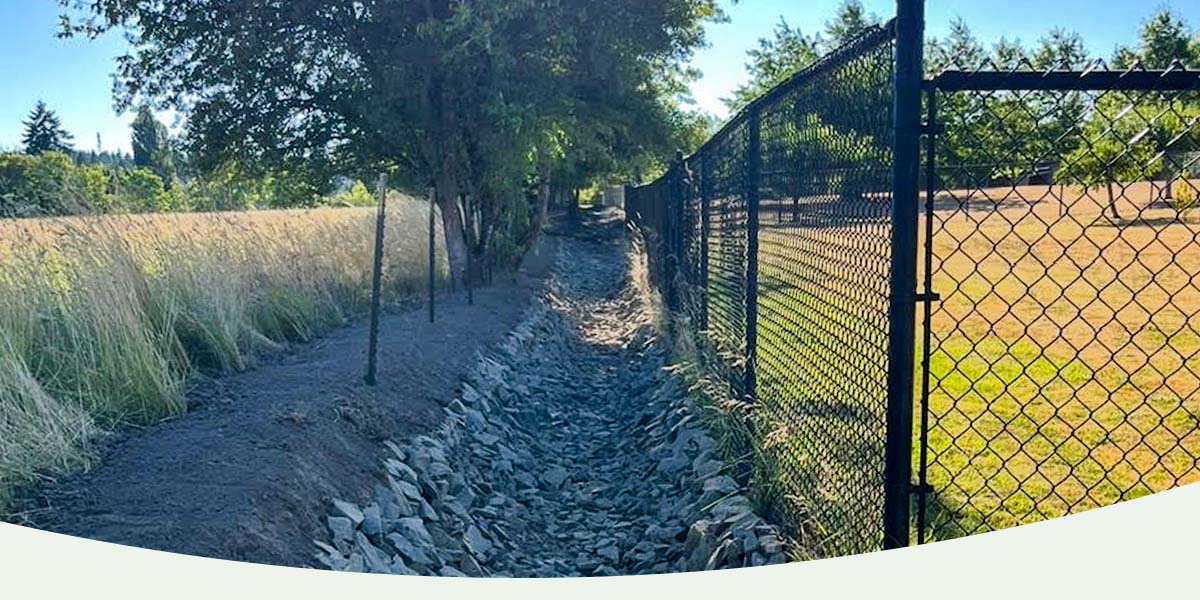
As the rainy season begins, so does the yard flooding. Rain is essential for the health and vitality of gardens and lawns. It’s nature’s irrigation system. But sometimes, it’s excessive and turns your beautiful, natural oasis into a muddy swamp. If this pooling of water is a common feature in your yard, it may be time to consider investing in a more effective drainage system, such as a landscaping swale.
But what is a swale, and why would you need one? This guide will walk you through what a swale drainage system is, its various types, reasons why your property needs a drain upgrade and the benefits of having this dual-purpose feature on your property.
To define swales, they are shallow but wide channels that redirect water away from vulnerable areas on your property that are prone to flooding after rainfall. This drainage system is gently sloped and works in harmony with your yard’s natural landscape, helping to control and slow water flow and prevent waterlogging & saturation of a broad area.
An appealing trait of the swale drainage system is that it can seamlessly blend into your gardenscape. Lining it with river rocks and enhancing the edges with plants will transform it into a water feature that’s both functional and beautiful. It resembles a dry streambed and becomes a trickling water display after the rain.
Swales act as a protective measure against excessive water runoff by strategically intercepting and guiding water flow through a controlled stream. When it rains, the water flows into the drainage swale, where it is temporarily held while it filters and absorbs into the ground or carried to a desired destination.
Swale drains work by:
Depending on your property’s soil type, grading, climate and drainage requirements, there are different types to consider before installing a swale in the backyard. Knowing the difference between each will help you choose the right solution.
For areas that receive significant rainfall and properties with high water tables, wet swale drains are the most effective solution. They are designed to control runoff from snowmelt and rain and retain water for longer periods.
Typically, these swales develop into permanent water features that enhance a garden’s ecosystem, supporting the growth of wetland plants and attracting a variety of wildlife.
A dry swale doesn’t retain water like a wet swale. Rather, it remains shallow or dry and only fills with water after rainfall. They are designed to absorb water quickly, offering an effective solution for properties that receive occasional runoff during rain showers.
The primary function of a dry swale is to filter water in areas and properties with a low water table, which helps prevent waterlogging.
Ideal for reducing erosion, filtering runoff and slowing water, a vegetated swale is lined with grass or other vegetation, which promotes absorption. Since water flows more slowly when its path is obstructed, it has more time to seep into the ground.
Vegetated swales provide a natural-looking drainage system that complements your gardenscape.
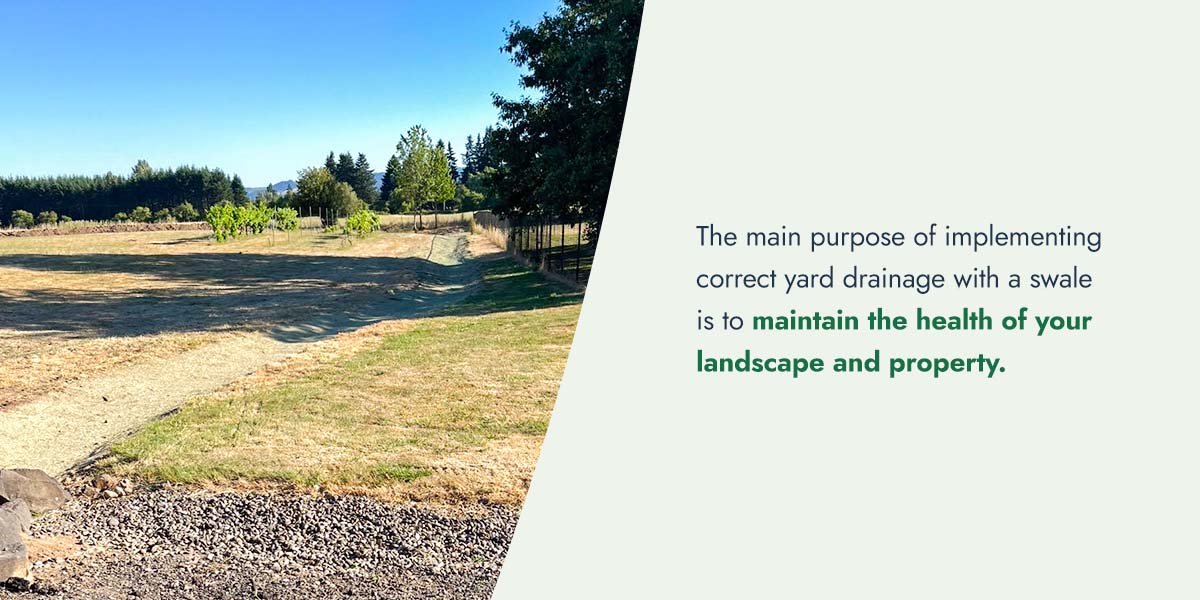
The main purpose of implementing correct yard drainage with a swale is to maintain the health of your landscape and property. Flooding and water pooling can cause significant damage to your home, harm your plants and even weaken your landscape. Many problems arise after excessive rainfall. Not sure which drainage solution is right for your property? Schedule a consultation with our experts.
Other key reasons why you may need a swale include:
If you’re experiencing any flooding, foundation issues and root rot, these may be signs to upgrade your drainage system.
There are many advantages of implementing a swale in the backyard, including:
There are also a few factors to consider when planning your drainage solutions. Swales require larger and wider areas to be effective in redirecting water. Areas with steep slopes are not ideal for swale drains, as they generally require gently sloped terrain. During extreme weather, swales can also be susceptible to erosion if not properly vegetated or lined.
Investing in a swale helps resolve unwanted flooding, reduces the risk of property damage and enhances the aesthetic of your gardenscape. Turn your murky swamp back to its original lively oasis with help from Drainage Masters LLC. With 30 years of experience in diagnosing and solving all types of yard drainage issues, we offer tailored solutions to help your yard remain puddle-, flood- and waterlog-free.
If you’re interested in a new swale drainage system, get it done right the first time with Drainage Masters LLC. Contact us today to request a quote or get more information.


